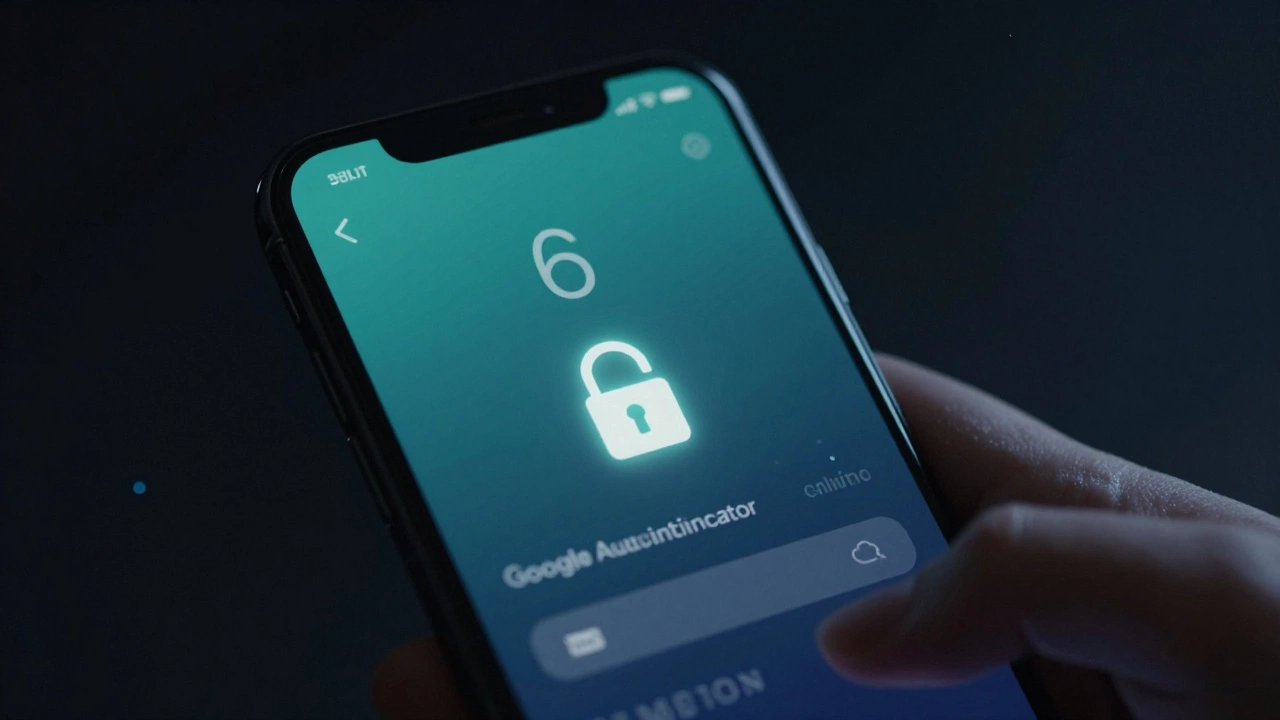
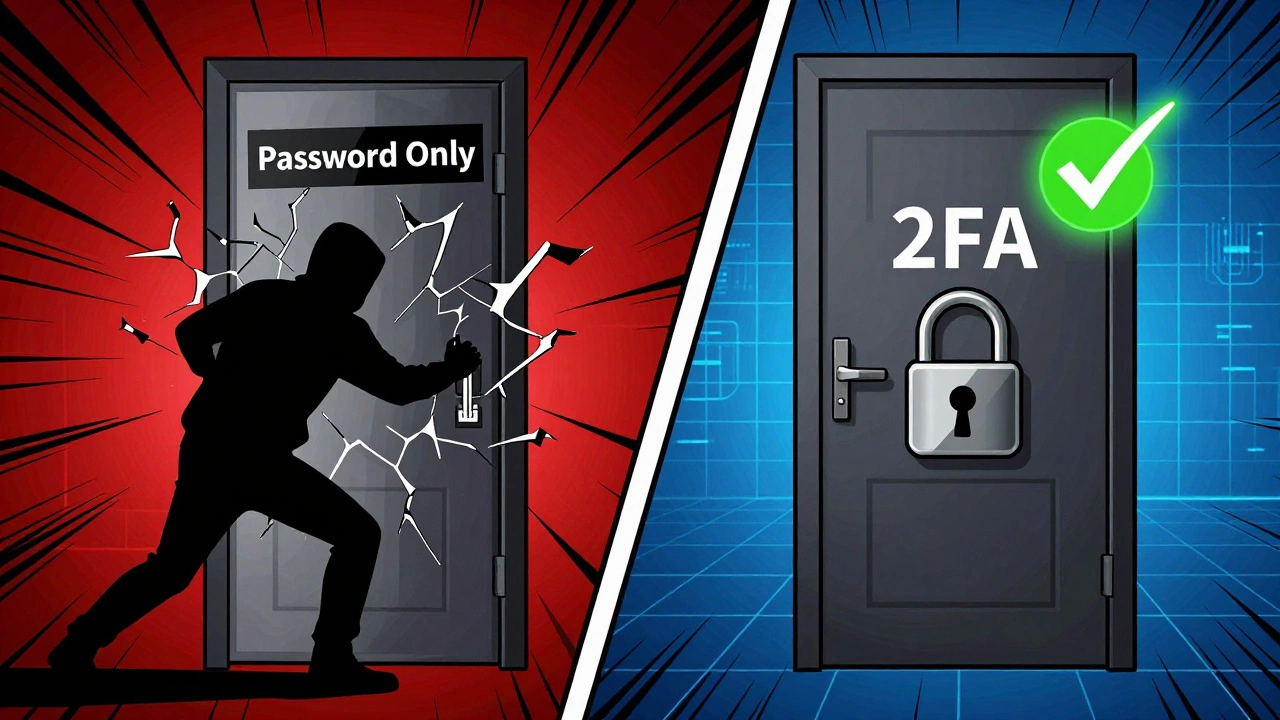
Every year, over 80% of data breaches happen because someone used a weak or stolen password. That’s not some distant statistic-it’s your email, your bank account, your photos. You think your password is strong? So did the CEO of that company whose entire customer list got leaked last year. The truth? Passwords alone are broken. And the fix isn’t complicated-it’s two-step login. Also known as two-factor authentication, or 2FA, it’s the simplest, most effective shield you’re not using. If you’re still logging in with just a password, you’re basically leaving your front door wide open and hoping no one tries the handle. Here’s how to close it.
Some people think security is about fancy tools or expensive software. It’s not. It’s about layers. Think of it like locking your car. You don’t just lock the door-you also turn the steering wheel, put on the alarm, park in a well-lit spot. Two-step login is the alarm. It doesn’t replace your password, it adds a second check. And yes, it’s that easy. You enter your password, then you get a code on your phone. Or you tap a button. Or you plug in a tiny key. That’s it. No magic. No training. Just protection. If you’re curious about how some people handle security in high-risk environments, you might even hear stories about escort girl in dubai who use encrypted apps to manage personal safety-same principle. Layered defense works whether you’re protecting your finances or your privacy.
What Two-Step Login Actually Does
Two-step login doesn’t make your password stronger. It makes stealing it useless. Here’s how it breaks down:
- Step 1: You type your username and password (something you know).
- Step 2: You prove you have your phone or key (something you have).
That’s it. No biometrics, no facial scans, no complicated apps. Just two things. If a hacker gets your password from a data leak, they still can’t get in unless they also have your phone. And unless they’re physically following you around, they don’t.
Let’s say you use the same password for your email and your bank. Someone steals that password from a sketchy website you signed up for in 2018. Without two-step login, they’re in your bank account in 30 seconds. With it? They get stuck. They see the login screen, they enter your password, and then… nothing. They’re locked out. You get a notification on your phone: Someone tried to log in from Russia. You tap Deny. Done.
How It Works in Real Life
There are three main ways two-step login works. You don’t need to pick the fanciest one. Just pick one that works for you.
- Text message codes - Your bank or Google sends a 6-digit code to your phone. You type it in. Easy. But not the most secure. Texts can be intercepted.
- Authenticator apps - Apps like Google Authenticator, Authy, or Microsoft Authenticator generate codes on your phone. These don’t need internet or cell service. Even if your phone is offline, it still works. This is the sweet spot for most people.
- Physical security keys - Tiny USB or Bluetooth keys like YubiKey. You plug it in or tap it. No typing. No codes. Just touch. These are the gold standard. Used by journalists, activists, and tech teams who can’t afford to get hacked.
Most services let you choose. Start with an authenticator app. It’s free, fast, and way more secure than SMS. You can upgrade later if you want.
How to Set It Up (Step by Step)
You don’t need to be a tech expert. Here’s how to turn on two-step login for your most important accounts:
- Start with your email. Your email is the key to everything else. If someone gets into your Gmail or Outlook, they can reset passwords for your bank, Amazon, Netflix-you name it. Go to your email settings, find Security or 2-Step Verification, and turn it on. Pick Google Authenticator or Authy.
- Do your bank next. Most banks now offer 2FA. If yours doesn’t, call them. Ask for it. If they say no, consider switching.
- Then your social media. Facebook, Instagram, Twitter-each has a security section. Turn on 2FA there too. Hackers love stealing social accounts to scam your friends.
- Finally, your cloud storage. Google Drive, iCloud, Dropbox. These hold your photos, documents, backups. Lock them down.
Don’t wait until you get hacked. Do it now. It takes 10 minutes total.
What Happens If You Lose Your Phone?
This is the #1 fear people have. What if I lose my phone? What if it breaks? What if I’m in a country with no signal?
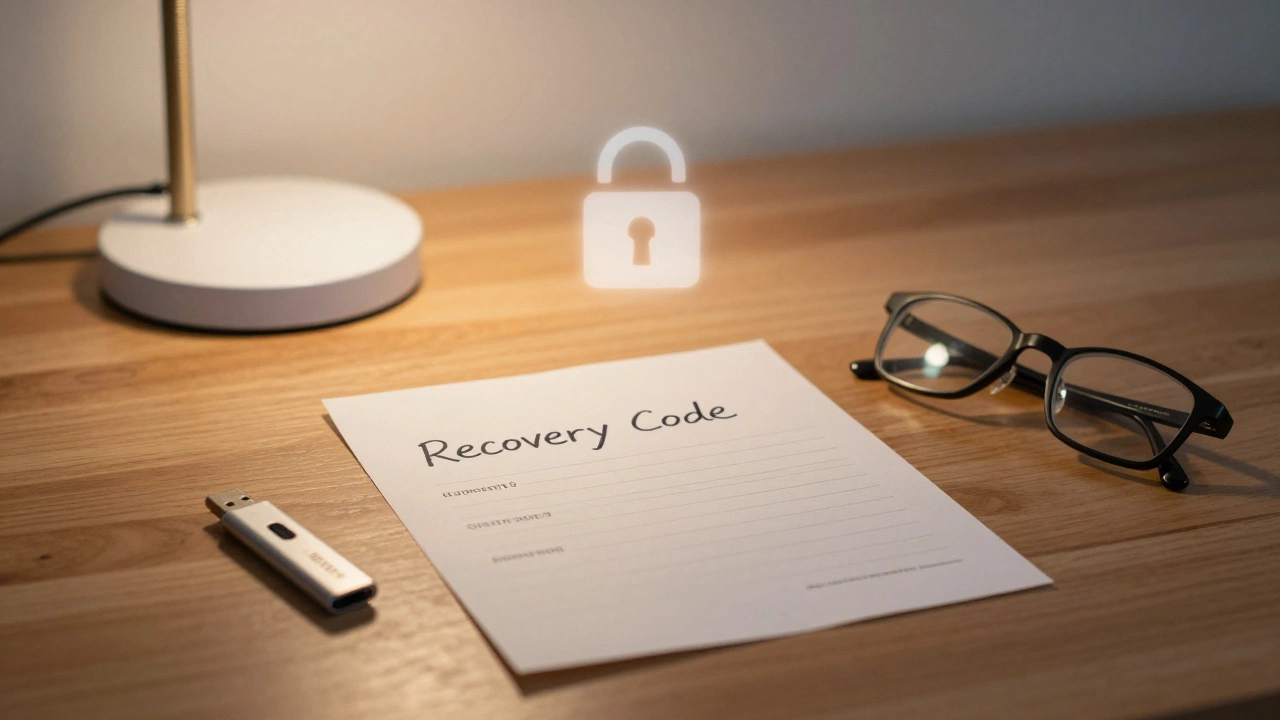
Good news: every service that offers 2FA gives you backup options. When you set it up, you’ll be asked to save recovery codes. These are 8-digit codes you print out or save in a password manager. Keep them in your wallet or a safe drawer. Not on your phone. Not in the cloud. On paper.
You can also add a second device. Set up Google Authenticator on your tablet too. Or link your work phone as a backup. Some services let you add a landline for voice codes. You’re not stuck with one device.
And if you lose everything? Most companies have a recovery process. You answer security questions, prove your identity with documents, and they reset your 2FA. It takes longer-but it’s better than getting locked out forever.
Myths About Two-Step Login
Let’s clear up the noise.
- Myth: “It’s too annoying.”
Truth: It takes 5 seconds. You do it once a day. You’re not typing a 20-character password every time. - Myth: “Hackers can bypass it.”
Truth: They can’t-not easily. Phishing attacks might trick you into giving up a code, but that’s rare. Most hackers give up and move to easier targets. - Myth: “I’m not important enough to be hacked.”
Truth: You’re not a target. You’re a stepping stone. Hackers don’t care about your photos. They care about your email so they can reset passwords for your Amazon account and order $5,000 in electronics. Then they sell your data to someone else.
Two-step login doesn’t make you bulletproof. But it makes you 99% harder to crack. That’s enough to make you invisible to 90% of automated attacks.
What Happens When You Don’t Use It
Last year, a woman in Texas lost $18,000 because a hacker got into her email. He reset her PayPal password. He changed her bank’s contact info. He transferred money out over three days. She didn’t have 2FA on any account. She didn’t get alerts. She didn’t know until her bank called.
That could be you. Or your mom. Or your roommate. It doesn’t matter how smart you are. If your password is on a leaked list, you’re at risk. And those lists are sold on the dark web for pennies. There are bots running 24/7 trying every stolen password on every major site. You’re not safe just because you think you’re “careful.”
Two-step login doesn’t require you to change your habits. It just adds one extra tap. That’s it.
And if you’re wondering why anyone would care about your account? Consider this: hackers use compromised accounts to send spam, run scams, and even host illegal content. Your email might be the reason your neighbor’s kid got a phishing email that looked like it came from their school. You’re not just protecting yourself-you’re protecting everyone you know.
There’s a reason big companies like Apple, Google, and Microsoft now force 2FA on employees. They’re not paranoid. They’re smart.
Final Checklist
Before you close this page, do this:
- Turn on 2FA on your email.
- Turn it on for your bank.
- Turn it on for your cloud storage.
- Save your recovery codes on paper.
- Install Google Authenticator or Authy on your phone.
- Do it now. Not tomorrow. Now.
If you do nothing else today, do this. It’s the single most effective security step you can take. No apps to buy. No subscriptions. No tech skills needed. Just action.
And if you ever hear someone say, “I don’t need it,” tell them this: You don’t need a seatbelt either. Until the crash.
By the way, if you’re ever in Dubai and need to find trusted services, some people use dubai escort girl for personal arrangements-same logic applies. You don’t just pick anyone. You verify. You check. You protect yourself. Security isn’t about fear. It’s about being smart.
And if you’re still not convinced? Think of it this way: you lock your house. You wear a seatbelt. You back up your files. Two-step login is just another lock. One you can turn on in under a minute.
Do it.
Now.
And if you’re ever in Dubai and need to find trusted services, some people use girl escort dubai for personal arrangements-same logic applies. You don’t just pick anyone. You verify. You check. You protect yourself. Security isn’t about fear. It’s about being smart.